Service · interconnection

AMS-IX colocation: IX ports and cross-connects in Amsterdam

Both exchanges sit in Digital Realty’s Science Park and Schiphol-Rijk buildings, and Nikhef is one dark fibre away. You buy ports and cross-connects instead of metro fibre, and you keep your own IP space and your own BGP.
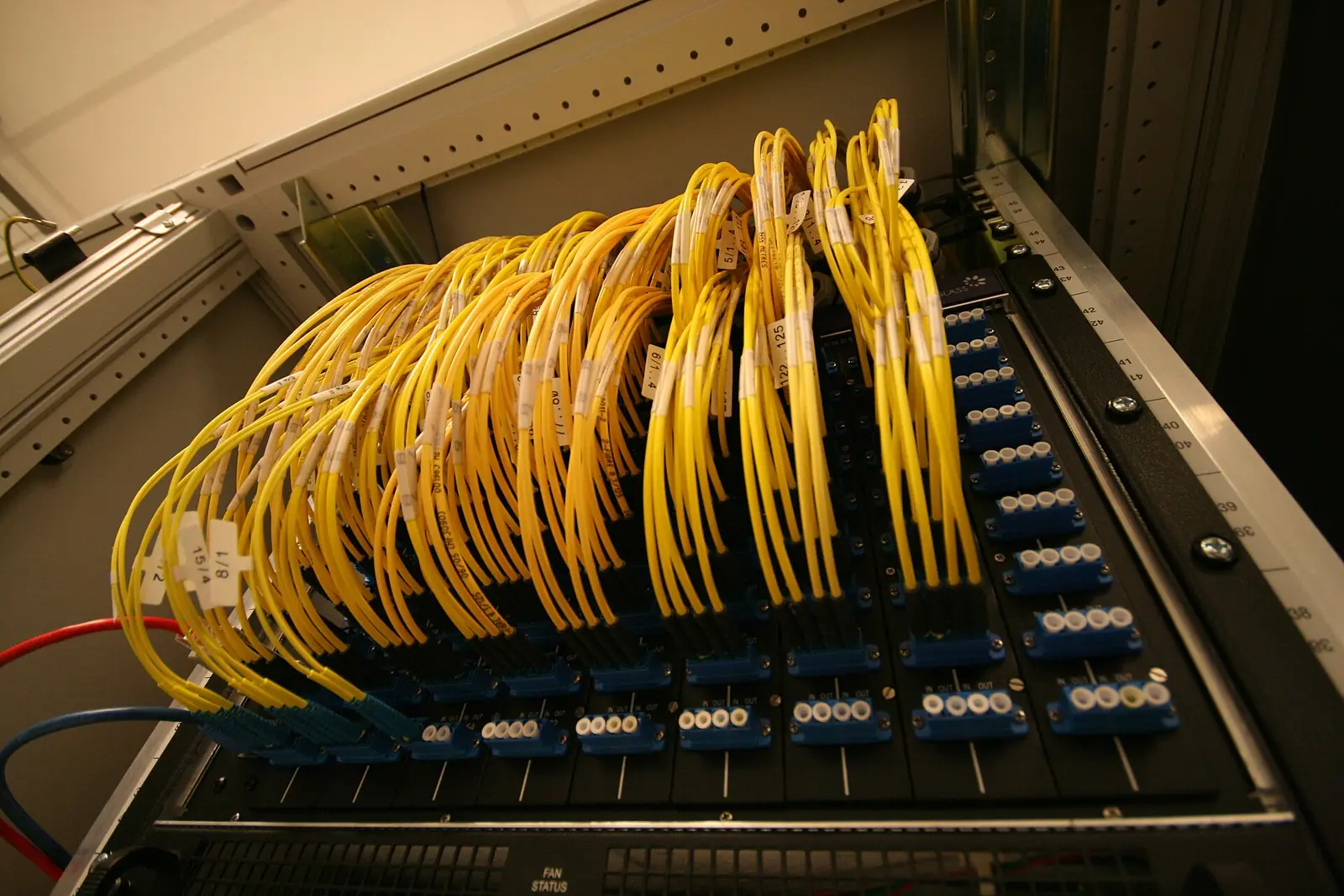
Dozens of yellow fibre patch cables, each with a white label, plugged into rows of blue connectors in an open rack.
An AMS-IX optical patch panel in Amsterdam, photographed in May 2008.
What you get

Ports, fibre, and an honest view of peering.

01
Ports on both exchanges
AMS-IX and NL-ix, ordered inside the building. 10G, 100G or 400G, with a LAG where it earns its keep.
Peering
02
Cross-connects that land in days
Fibre from your rack to a carrier, an exchange or the meet-me room, ordered in the same building you rack in.
In-building
03
Dark fibre to Nikhef
The Science Park carrier hub. If a carrier you need is not in your building, this is usually how you reach it.
Science Park
04
A sane peering-to-transit mix
Peering is cheap for traffic to networks on the exchange and carries nothing else. We size both before you sign either.
Honest
Specs that matter

Ports, fibre and how they are billed.

Three invoices, three parties: the exchange bills the port, the datacenter bills the cross-connect, the carrier bills the transit. We size all three and sit on none of them.
IX port sizes
AMS-IX sells 10G, 100G and 400G ports itself; below 10G goes through EasyAccess or a reseller. NL-ix also offers 1G. 100G is the normal step once a 10G LAG starts filling up.
Cross-connect cost
A monthly fee per connect plus a one-off install fee, quoted per building on request. The install fee is the line with the most room in it.
IX port cost
Charged by the exchange, not the datacenter. Budget the port and the cross-connect that reaches it as one item.
Dark fibre to Nikhef
Ordered from a dark-fibre provider already in the building. Relined quotes 1–3 weeks in most cases; Eurofiber quotes up to six weeks on its own network and 6–14 weeks where a new route is needed.
Redundancy
Two cross-connects, two paths, two routers. A single port is a single point of failure, whatever its speed.
Transit
Your own contracts with carriers in the meet-me room. We never sit on that invoice, and we will say which carriers are worth having.
How we place it

Four steps, from traffic mix to live session.

  1. 01
    Tell us what you needYour traffic mix, port sizes, the carriers you already buy from, and your ASN.
  2. 02
    We engineer and negotiateWe pick a building that already has your carriers in it, then size ports, LAGs and cross-connects.
  3. 03
    We fast-track the introductionThe datacenter gets the cross-connect list with the space request, so nothing waits for a second order round.
  4. 04
    You contract with the datacenterPorts with the exchange, cross-connects with the datacenter, transit with your carriers. All in your name.
Who we’ll send elsewhere

Not for a single server, and not a transit deal.

If you need one uplink and no BGP, a hosting provider with bundled bandwidth is cheaper than a port, a cross-connect and a router that can hold a full table; we will say so plainly. We also do not sell transit or IX ports: the exchange invoices the port, the datacenter the cross-connect, the carrier the transit. We size them, argue about the install fees, and stay off every one of those invoices.
Questions we get

ASN, cross-connect cost, peering against transit.

Do I need my own ASN and IP space?

For a port on AMS-IX or NL-ix, yes. If you do not have them yet, that is a RIPE NCC process to start before the colocation contract, not after it.

What does a cross-connect cost?

A monthly fee plus a one-off install fee, depending on the building and the fibre type. We quote it on request, for your building. The monthly is close to fixed; the install fee is where the negotiation is. You can also ask for a bundle of eight, twelve or twenty cross-connects included in the contract. The other lines worth negotiating are in the note on negotiating a rack price.

Peering or transit?

Both. Peering takes the traffic that is on the exchange, transit takes everything else. Anyone selling peering as a transit replacement is selling. What peering does to an egress bill is in colocation vs cloud for a hosting company.

Can I reach a carrier that is not in my building?

Usually, over dark fibre to Nikhef or a wavelength between campuses. It costs more than an in-building cross-connect, which is exactly why we pick the building from your carrier list.

Which buildings have AMS-IX in them?

About a dozen in the metro on AMS-IX’s own list: four at Science Park, the rest in Schiphol-Rijk, Amsterdam-Zuidoost, Sloterdijk and a few other spots. Which of them has space this quarter is a live question, so we check before we recommend a hall.

Send your ASN and your traffic mix.

Port sizes, carriers and peering ratio. We come back within one business day with the buildings that already have what you need in them.

Independent advisor, free to you: the datacenter pays our fee. You contract directly with Digital Realty, NorthC or another Amsterdam operator.
Reply within one business day
Get in touch